Warren's Local Foundation & Basement Specialists
Structural Foundation Repair in Warren, MI
Talk to a local Warren crew today. Call 586-250-4101 for a fast, honest look at your foundation or basement.
This is the structural repair of foundation walls pushed inward — lateral movement, not settling. A block or concrete wall that's bowing, leaning, or bulging, a horizontal crack running along a mortar joint, a wall sliding in at the bottom or tipping at the top — these all mean the soil outside is winning the shoving match. We stop and hold that inward movement with steel beam bracing, wall anchors, or carbon fiber reinforcement, and we'll tell you honestly when a wall has to be excavated, straightened, or rebuilt.
Wall bowing or moving in? Call 586-250-4101 before it gets worse.
Proud to Serve Warren & Metro Detroit
Based in Warren and working across Macomb, Oakland and Wayne counties. Find your city below — and call us with any basement or foundation question.
What's Included
Bowing & leaning block walls
Walls pushed inward by soil pressure, seen as a bulge or a horizontal crack along a mortar joint.
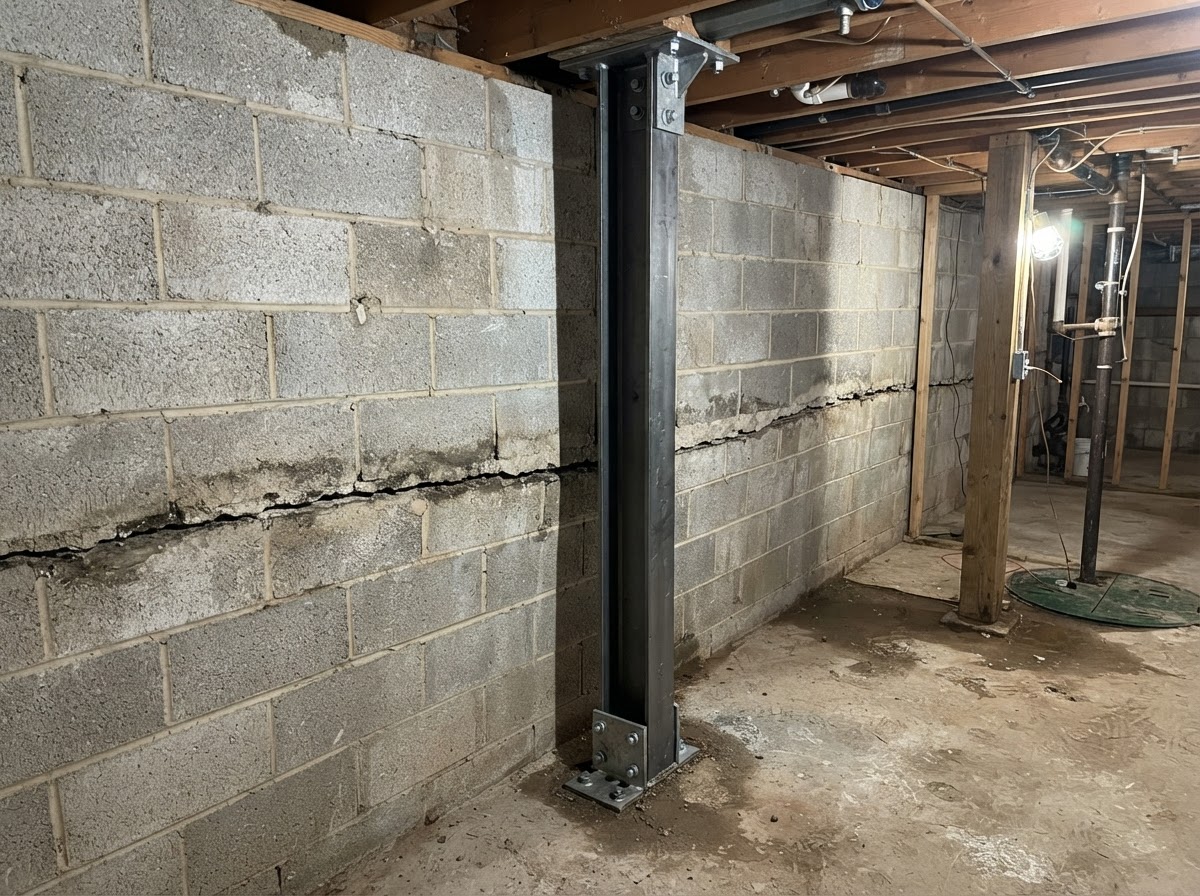
Steel beam bracing
Heavy I-beams anchored floor-to-joist hold a wall plumb and stop it from moving further inward.
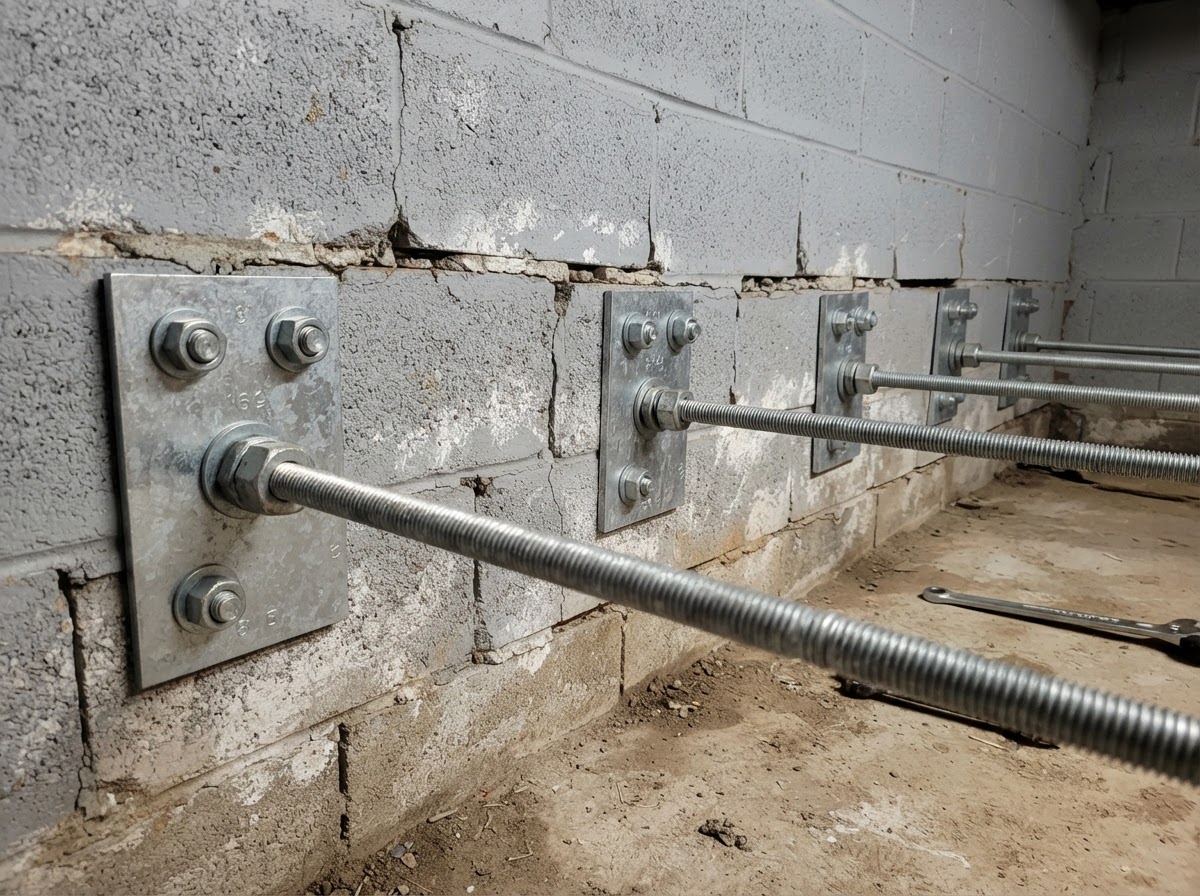
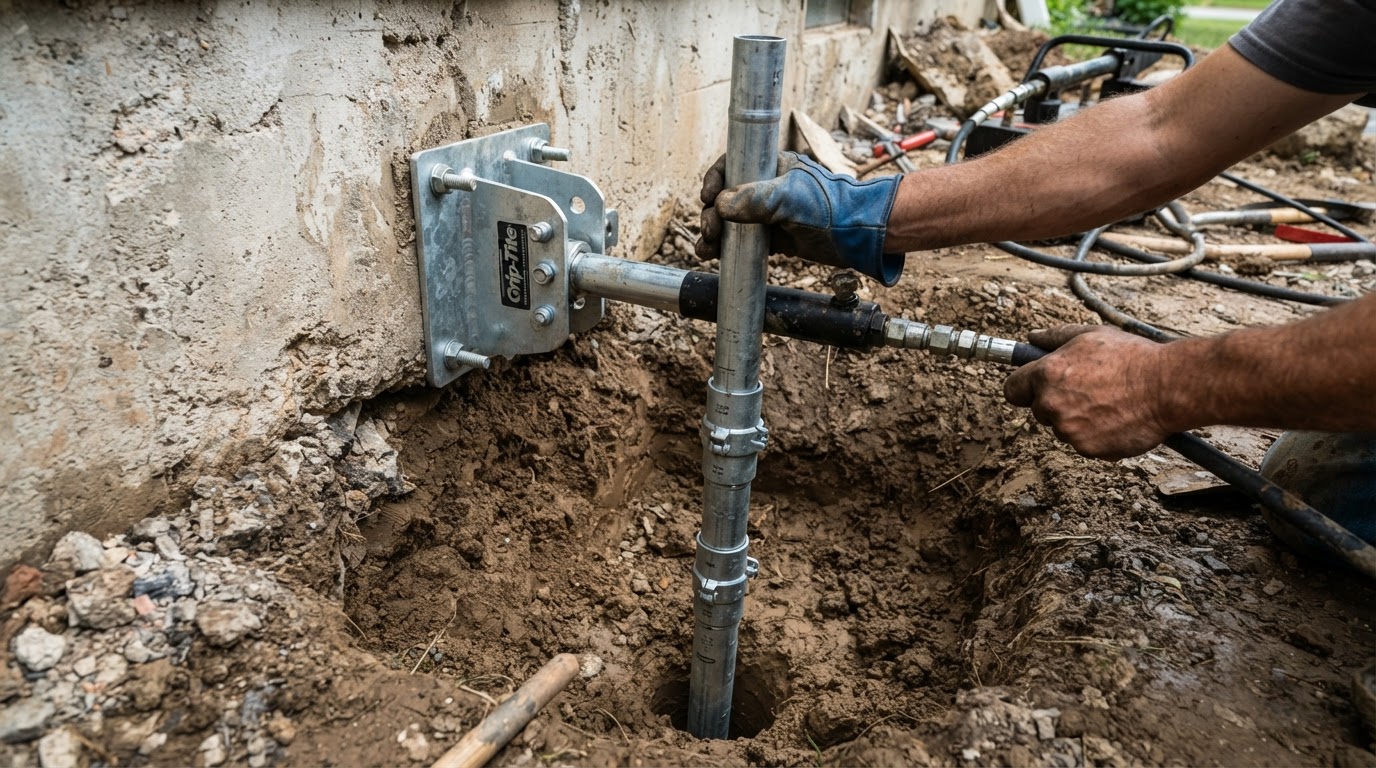
Wall anchors
Rod-and-plate anchors tie the wall to stable soil outside, holding it and allowing a controlled pull-back.
Carbon fiber reinforcement
Low-profile carbon straps epoxied to a wall stop further bowing when deflection is still within range.
Excavate, straighten or rebuild
Past a point a wall has to be dug out, straightened, or rebuilt — and we'll tell you when you're there.
Why This Happens in Warren
Warren and most of Metro Detroit sit on a flat, old glacial-lake plain with heavy clay soil that drains slowly, holds water against basement walls, and swells when wet and shrinks when dry. The land is very flat and the water table is often high, so after a storm the water has nowhere to go. Winters are long and the ground freezes several feet deep, so frozen, saturated clay pushes hard on basement walls, and repeated freeze-thaw cycles widen cracks year after year. Spring snowmelt and intense summer downpours saturate the ground fast, and the region has seen severe basement flooding from storms like those in August 2014 and June 2021. Warren grew fastest from the 1940s through the 1960s, so its housing is largely brick ranches, bungalows and Cape Cods with concrete-block or poured-concrete basements whose original drain tile, sump pumps and waterproofing are now well over half a century old.
Here's exactly why walls bow in Warren: heavy clay swells when wet and pushes hard against your basement wall, and a long, deep Michigan freeze drives that frozen, saturated clay even harder. A block wall isn't as strong across its face as it is up and down, so the pressure bows it inward right around the frost line — usually with a horizontal crack along a mortar joint as the tell. Repeat freeze-thaw cycles and wet springs ratchet it a little further each year. Add a downspout dumping water right at the wall, or poor grading, and the pressure doubles on that one spot. It's the same story in the older block basements from Detroit out to Livonia, and the slightly newer ones in Sterling Heights and Southfield — the walls that are bowing now are the ones that have been fighting the clay for fifty winters.
How to help prevent it
Cost Guide
| Repair type | Typical price range | What affects cost |
|---|---|---|
| Steel beam bracing (per beam) | Free quote after inspection | Driven by wall length, number of beams needed, floor and joist anchoring, and finished vs. bare wall. |
| Wall anchor system | Free quote after inspection | Inside plates, outside rods and excavation; cost depends on exterior access and number of anchors. |
| Carbon fiber straps | Free quote after inspection | The lowest-impact option when deflection is within range; priced per strap and wall prep. |
| Excavate / straighten / rebuild | Free quote after inspection | The biggest fix for a wall past its limit; depends on depth, access, landscaping, and wall length. |
We won't quote a firm price until we've seen it in person — every home is a little different. Call 586-250-4101 for a free, no-obligation inspection.
Why Choose Us
Match the method to the wall
Carbon fiber, beams, or anchors — we use the lightest fix that will actually hold.
Stop it where it is
We brace to stop movement first, then talk straightening, so it doesn't get worse during the job.
Honest about rebuild
If a wall is past bracing, we say so and quote the dig-out instead of overselling a brace that won't hold.
Fix the cause too
We address the water and soil pressure outside, not just the wall inside.
A bowing wall only gets more expensive with time.
Let's stop it where it is.
Our Process
- 1
Call and tell us what you see — a bulge, a horizontal crack, a wall that looks inward.
- 2
We measure the wall's deflection, check for cracking and movement, and assess the cause.
- 3
We show you how far it's moved and quote the right method — braces, anchors, carbon, or rebuild.
- 4
We install the bracing or anchors, stop the movement, and address the outside water.
- 5
We test the wall, clean up, and show you what to watch for going forward.
Frequently Asked Questions
Can a bowing block wall be fixed without rebuilding it?
What's the difference between this and settling repair?
Carbon fiber, beams, or anchors — which do I need?
How urgent is a bowing wall?
Our Other Services
Get Your Free Estimate
Tell us what you're seeing. We'll call you back quickly with a no-pressure look.