Warren's Local Foundation & Basement Specialists
Basement Waterproofing in Warren, MI
Talk to a local Warren crew today. Call 586-250-4101 for a fast, honest look at your foundation or basement.
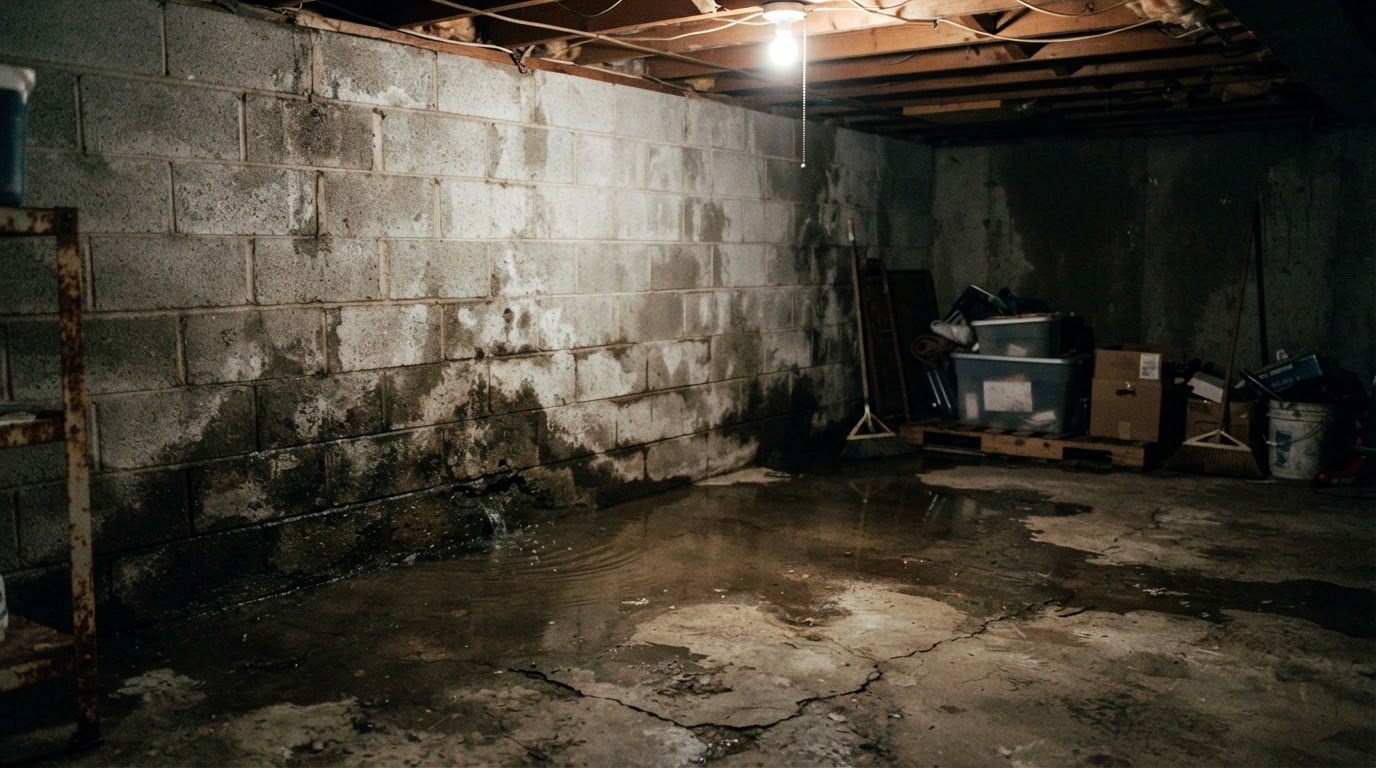
Waterproofing is about keeping water out of the basement — the drainage system and the leak, not the crack itself. The signs are familiar: water seeping where the floor meets the wall, damp or wet walls, puddles after a rain or snowmelt, a window well that fills up, or a musty smell that won't go away. We find where the water's really coming from and fix it with interior drain tile, exterior waterproofing, or drainage and grading fixes — whichever honestly solves it.
Basement wet right now? Call 586-250-4101 and we'll get out fast.
Proud to Serve Warren & Metro Detroit
Based in Warren and working across Macomb, Oakland and Wayne counties. Find your city below — and call us with any basement or foundation question.
What's Included
Floor-wall joint seepage
Water pushing up through the joint where the floor slab meets the wall is the most common leak — it's hydrostatic pressure under the floor.
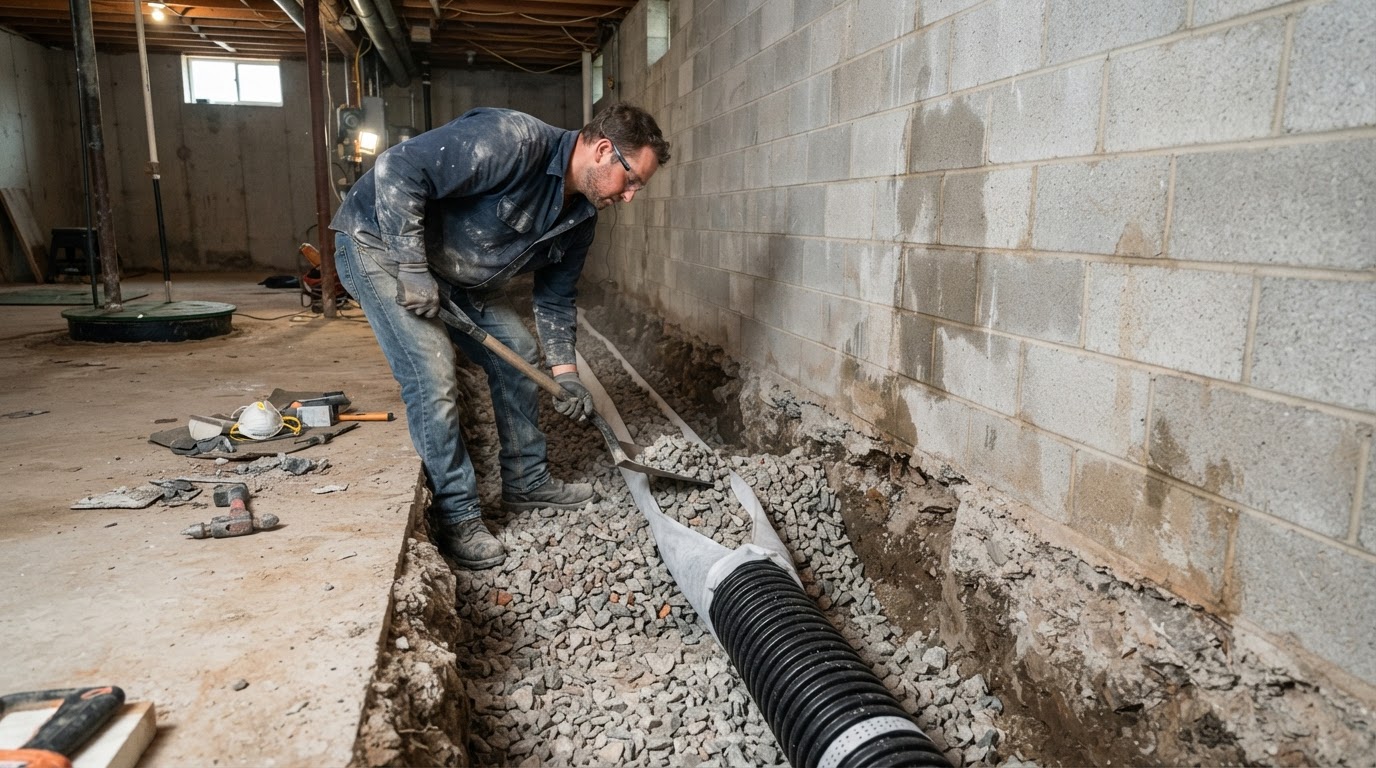
Interior drain tile systems
A trench along the floor-wall joint collects water and runs it to your sump pit before it reaches the floor.
Window well & wall leaks
Wells that fill and overflow, and dampness wicking through block walls, get sealed and drained at the source.
Exterior waterproofing membranes
For the worst cases we excavate outside and apply membrane and drainage board to the foundation wall.
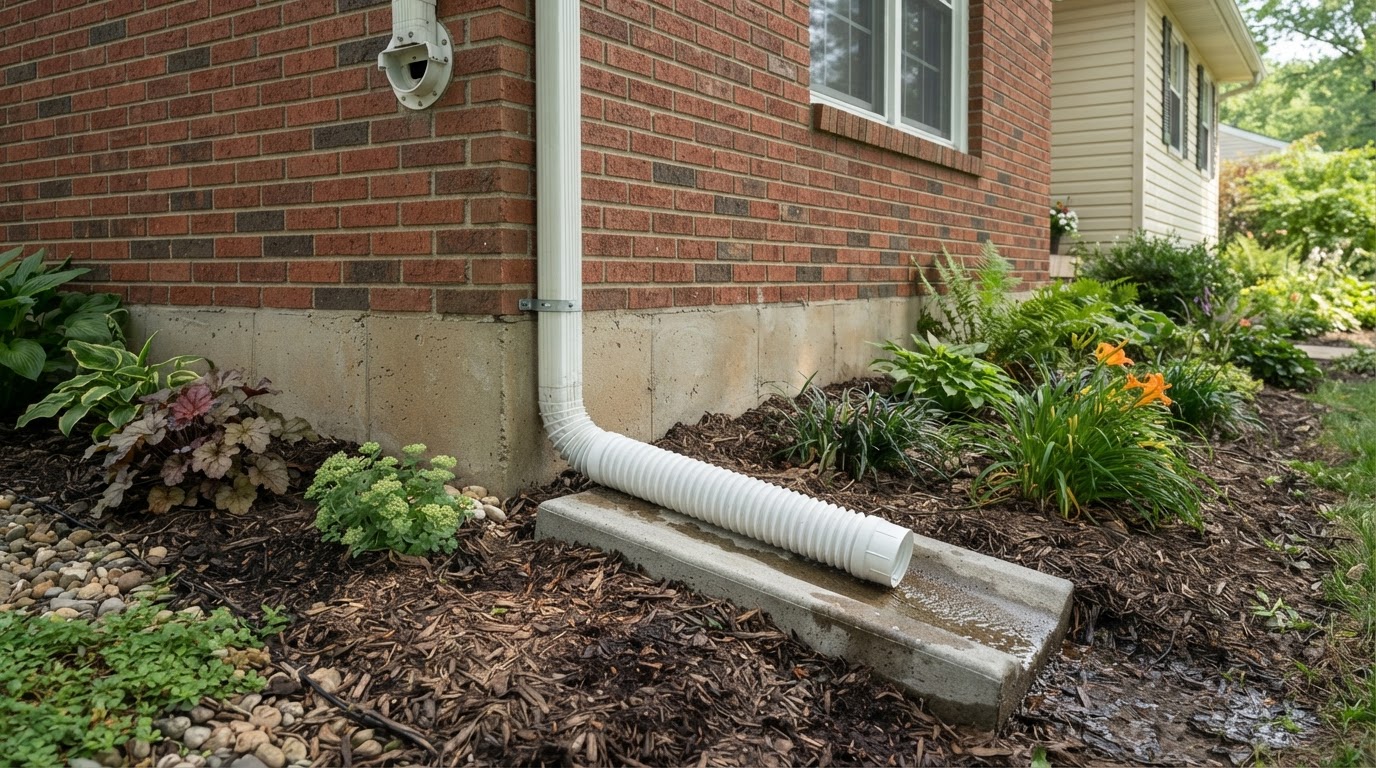
Grading & downspout correction
A lot of basement water starts outside — we fix the grade and downspouts so less ever reaches the wall.
Why This Happens in Warren
Warren and most of Metro Detroit sit on a flat, old glacial-lake plain with heavy clay soil that drains slowly, holds water against basement walls, and swells when wet and shrinks when dry. The land is very flat and the water table is often high, so after a storm the water has nowhere to go. Winters are long and the ground freezes several feet deep, so frozen, saturated clay pushes hard on basement walls, and repeated freeze-thaw cycles widen cracks year after year. Spring snowmelt and intense summer downpours saturate the ground fast, and the region has seen severe basement flooding from storms like those in August 2014 and June 2021. Warren grew fastest from the 1940s through the 1960s, so its housing is largely brick ranches, bungalows and Cape Cods with concrete-block or poured-concrete basements whose original drain tile, sump pumps and waterproofing are now well over half a century old.
This is the core of why Warren basements leak. The heavy clay drains slowly, the water table is high, and the land is flat — so after a storm or spring thaw the water has nowhere to go but into your basement. Hydrostatic pressure pushes water through the floor-wall joint and up through hairline cracks because the soil stays saturated against the wall. And the original drain tile and waterproofing in these 1950s and 60s basements is now well over half a century old — often clogged, crushed, or never installed right to begin with. The region has seen severe basement flooding from storms like those in August 2014 and June 2021, and a lot of homes found out their old waterproofing wasn't up to it.
How to help prevent it
Cost Guide
| Repair type | Typical price range | What affects cost |
|---|---|---|
| Interior drain tile system | Free quote after inspection | Driven by linear footage of the perimeter, concrete removal and repour, and tie-in to the existing sump. |
| Sump pit / pump upgrade | Free quote after inspection | Often needed with new drain tile; cost depends on pit size, pump, and backup. |
| Exterior membrane (per section) | Free quote after inspection | Excavation, membrane, drainage board and backfill — the most involved fix, quoted per linear foot. |
| Grading / downspout fix | Free quote after inspection | The lowest-cost fix when the real cause is drainage; we do this first whenever it honestly solves it. |
We won't quote a firm price until we've seen it in person — every home is a little different. Call 586-250-4101 for a free, no-obligation inspection.
Why Choose Us
Find the real source
We trace the water — inside or out — instead of assuming and overbuilding.
Drainage before demolition
If a downspout and grading fix it, we don't sell you a full drain tile system.
Tie to your sump
Drain tile only works if the pit and pump can carry it — we size them together.
Built for clay
We design drainage for soil that holds water, not sandy soil that drains on its own.
Tired of mopping the basement every storm?
Let's keep it dry for good.
Our Process
- 1
Call and tell us where the water shows up — we'll ask the right questions.
- 2
We inspect inside and out, check the sump, and trace the water to its source.
- 3
We show you the cause and quote the smallest honest fix — drain tile, membrane, or just drainage.
- 4
We do the work, test it under water, and clean up so your basement is dry and usable.
Frequently Asked Questions
Is basement waterproofing worth it?
Interior drain tile or exterior membrane?
Will waterproofing fix my damp, musty smell?
How long does an interior drain tile job take?
Our Other Services
Get Your Free Estimate
Tell us what you're seeing. We'll call you back quickly with a no-pressure look.