Warren's Local Foundation & Basement Specialists
Crawl Space Encapsulation in Warren, MI
Talk to a local Warren crew today. Call 586-250-4101 for a fast, honest look at your foundation or basement.
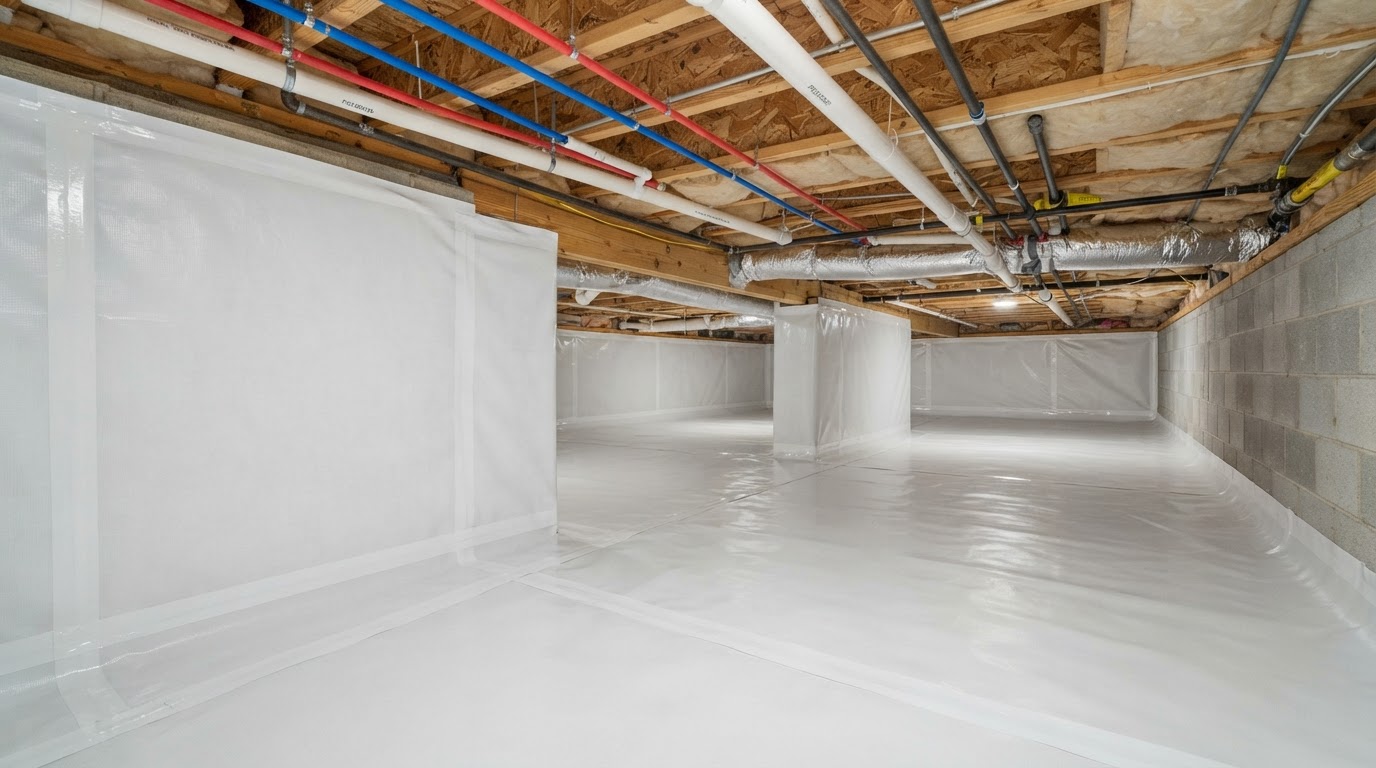
Encapsulation seals a crawl space so the damp ground below your house can't send humidity, mold, musty air and cold up into your living space. We line the floor and walls with a heavy-duty vapor barrier, seal the vents, add a dehumidifier and insulation where needed, and fix what was causing the humidity in the first place. It's the right fix when a crawl space is damp, smelly, breeding mold, hosting pests, or making your floors cold and your heating bills high.
Musty smell or cold floors? Call 586-250-4101 and let's see what's under there.
Proud to Serve Warren & Metro Detroit
Based in Warren and working across Macomb, Oakland and Wayne counties. Find your city below — and call us with any basement or foundation question.
What's Included
Heavy-duty vapor barrier
A reinforced, sealed liner across the floor and up the walls stops ground moisture from entering the space.
Sealing the vents
Open vents let humid summer air in and cold winter air in — sealing them and conditioning the space controls humidity year-round.
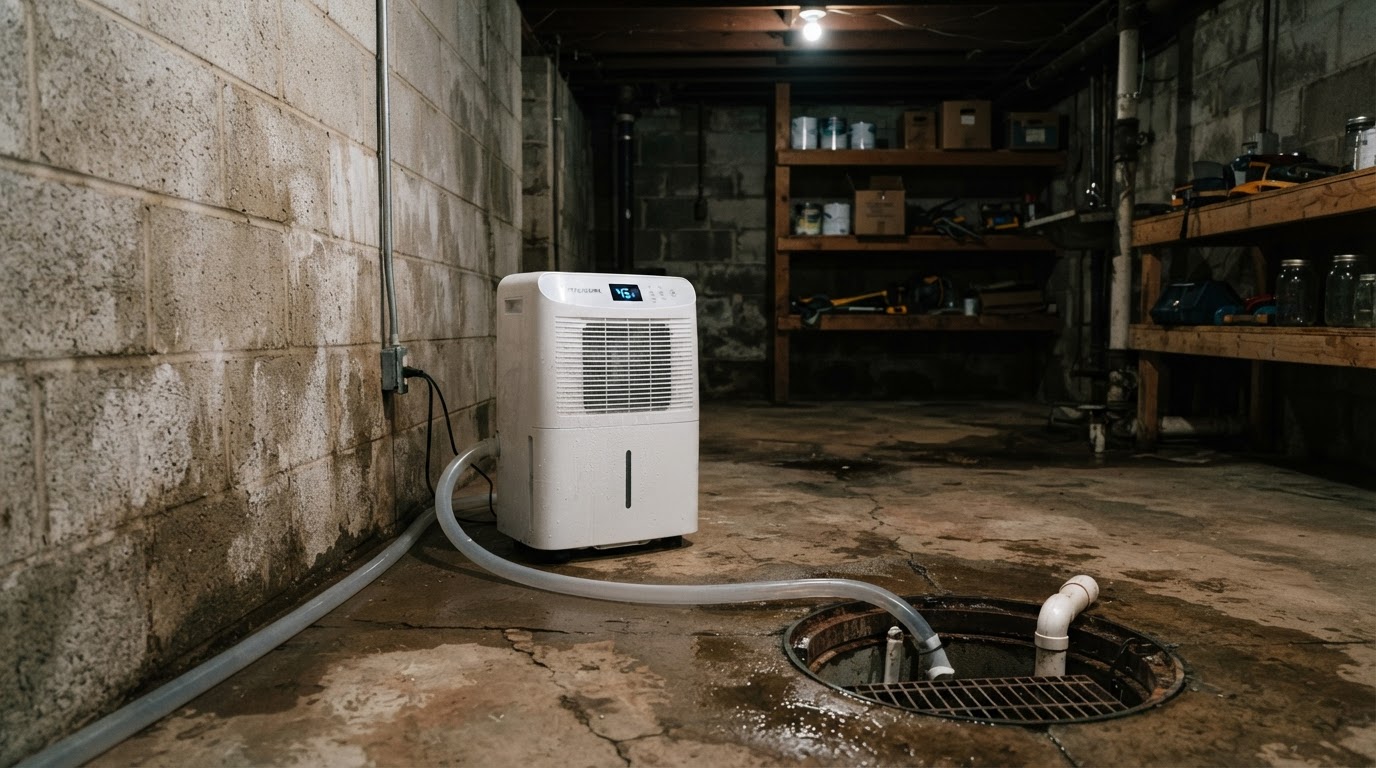
Dehumidifier
A crawl-space-rated dehumidifier keeps the air dry so mold and musty smells can't take hold.
Insulation
Insulating the walls or floor keeps cold out of the rooms above and stops frozen pipes in the cavity.
Drainage & sump tie-in
If water pools down there, we add drainage and a sump so the liner isn't sitting in a puddle.
Why This Happens in Warren
Warren and most of Metro Detroit sit on a flat, old glacial-lake plain with heavy clay soil that drains slowly, holds water against basement walls, and swells when wet and shrinks when dry. The land is very flat and the water table is often high, so after a storm the water has nowhere to go. Winters are long and the ground freezes several feet deep, so frozen, saturated clay pushes hard on basement walls, and repeated freeze-thaw cycles widen cracks year after year. Spring snowmelt and intense summer downpours saturate the ground fast, and the region has seen severe basement flooding from storms like those in August 2014 and June 2021. Warren grew fastest from the 1940s through the 1960s, so its housing is largely brick ranches, bungalows and Cape Cods with concrete-block or poured-concrete basements whose original drain tile, sump pumps and waterproofing are now well over half a century old.
Let's be honest about crawl spaces in Warren: most homes here have a full basement, not a crawl space. But a number of postwar ranches in Warren and the nearby suburbs were built over a crawl space or on a slab, and crawl spaces also show up under additions, sunrooms and porches added onto otherwise full-basement homes. When one does exist, our heavy clay and high water table mean the ground under it is damp most of the year, and warm summer humidity condenses on the cool surfaces and feeds mold. Open vents, meant to dry the space, actually pump humid Michigan summer air in and make it worse. So an existing crawl space here is almost always damp — and that damp travels straight up into the house as cold floors, musty air, and higher energy bills.
How to help prevent it
Cost Guide
| Repair type | Typical price range | What affects cost |
|---|---|---|
| Full encapsulation (liner + seal + dehumidifier) | Free quote after inspection | Driven by square footage, liner thickness, vent/door sealing, and whether insulation or drainage is needed. |
| Vapor barrier only | Free quote after inspection | The lower-cost option for a dry space that just needs a liner; price varies with size and prep. |
| Dehumidifier install | Free quote after inspection | Sized to the crawl volume; often paired with a condensate pump or sump tie-in. |
| Drainage / sump in the crawl | Free quote after inspection | Needed when water pools under the liner; cost depends on access and discharge routing. |
We won't quote a firm price until we've seen it in person — every home is a little different. Call 586-250-4101 for a free, no-obligation inspection.
Why Choose Us
Honest about whether you have one
Most Warren homes have basements — we won't sell encapsulation you don't need.
Seal it right, not just drape it
We seal seams, vents, and penetrations so humidity can't sneak past the liner.
Condition the air
A dehumidifier is what keeps the space dry long-term — not just a barrier.
Fix the water first
If it pools, we add drainage before we lay the liner.
Cold floors or a musty house?
It might be the crawl space underneath.
Our Process
- 1
Call and tell us what you're noticing — smells, cold floors, visible dampness.
- 2
We inspect the crawl space, check for water, humidity, mold and pests, and measure it.
- 3
We show you what we find and quote the right level — barrier only or full encapsulation.
- 4
We prep, lay and seal the liner, seal vents and doors, and set the dehumidifier.
- 5
We test humidity and show you how to keep it dry going forward.
Frequently Asked Questions
Does the crawl space under my ranch need encapsulation?
Why are my floors cold and my bills high?
Should crawl space vents be open or closed?
Will encapsulation get rid of the musty smell?
Our Other Services
Get Your Free Estimate
Tell us what you're seeing. We'll call you back quickly with a no-pressure look.